
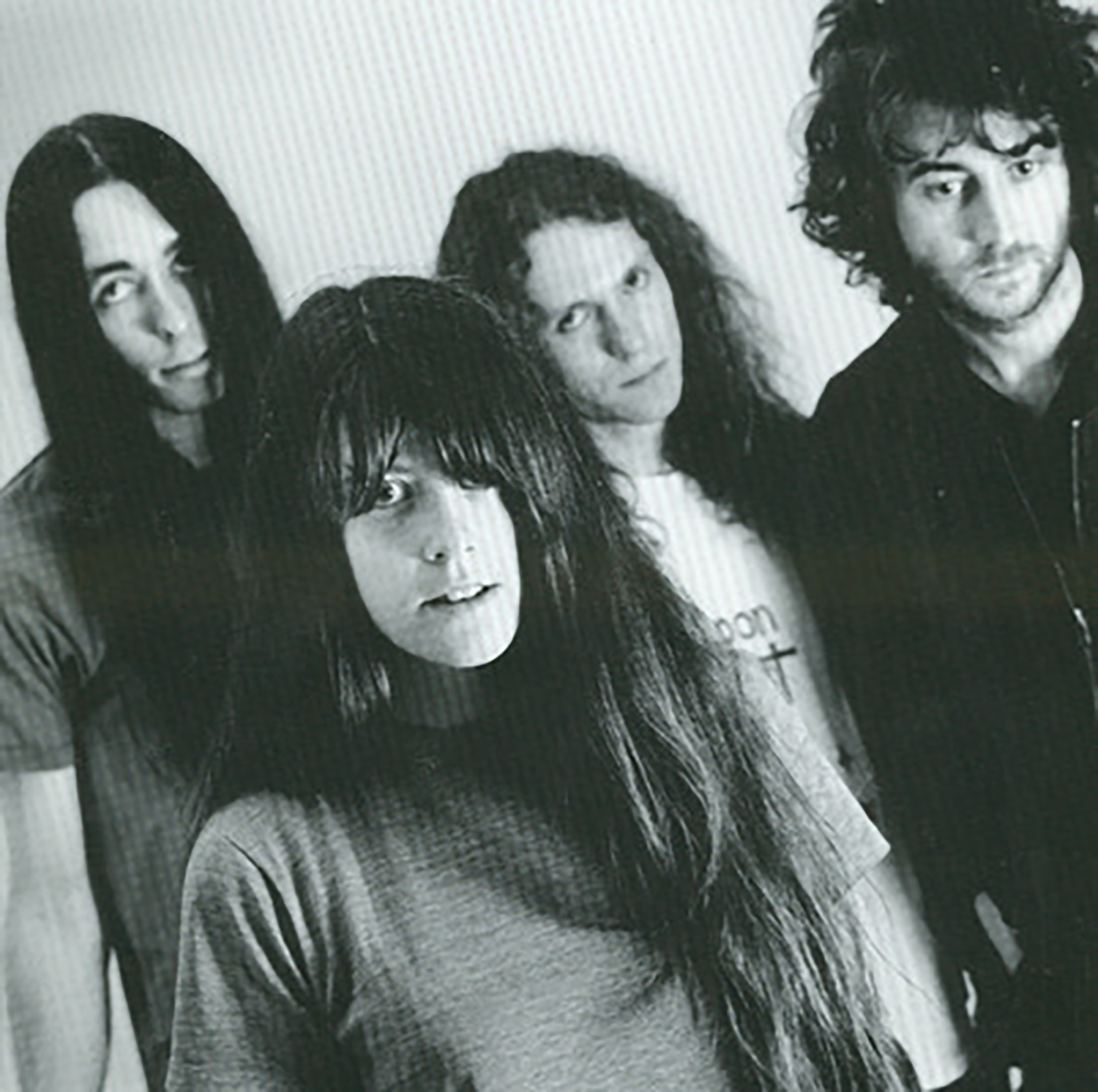
Some Canadian bands are more than bands. They’re starting points.
You hear one record, start looking into the members, discover another band, then another project, then a side project, then a record someone produced, and suddenly it’s two hours later and you’re several layers deep into a musical rabbit hole wondering how you got here.
That is exactly the idea behind a new OurBasement series: Canadian Indie Constellation.
Rather than simply looking at a band’s discography, this series is about following the connections — the bands, side projects, collaborations, labels, scenes and musicians that orbit around an artist or group. Canadian indie music has always been full of these tangled little networks, where the same musicians keep appearing in different combinations and entire scenes grow out of a handful of friendships, basement rehearsals and questionable recording equipment.
And for the first instalment, there was really only one place I could start: Eric’s Trip.
The Moncton connection
Eric’s Trip formed in Moncton, New Brunswick, in 1990 when Rick White and Chris Thompson joined Julie Doiron and Ed Vaughan, who was soon replaced by Mark Gaudet. White and Thompson had already been part of the local scene, including their time together in The Forest.
The band took its name from a Sonic Youth song and developed a sound that was gloriously difficult to put in a box: thick distorted guitars, noisy and loose-edged punk, dreamy vocals, melodic songwriting and quieter folk influences. Rick White described it as “sappy melodic pop music on top of thick distortion,” while Mark Gaudet later summed it up rather beautifully as “dreamy punk.”
And they were figuring all of this out in basements.
Their self-titled cassette was recorded in December 1990 using a borrowed four-track cassette recorder and inexpensive microphones and equipment. Recorded live in a basement, with vocals added separately, it captured the raw, loud, lo-fi sound they were developing. It was released independently in Moncton and sold more than 100 copies locally — enough to keep the momentum going.
The Catapillars EP arrived in April 1991, recorded live in Chris Thompson’s parents’ basement. By then, the songs were getting more developed and melodic, with “Catapillars” showing a quieter acoustic side and “Brave and Bland” marking the beginning of Thompson contributing his own songs.
Three months later came Drowning. Recorded in July 1991, it continued the collision of noisy guitars and subdued melodic material. The two seven-song EPs were partly inspired by the My Bloody Valentine EPs the band admired, and Rick White would later look back on Catapillars and Drowning together almost as a second album.
In other words, Eric’s Trip was finding its sound in real time: cheap equipment, basement recordings, distorted guitars, dreamy vocals and increasingly catchy songs.
And then the rabbit hole opens
The interesting thing about Eric’s Trip isn’t just what the band sounded like. It’s what happened around them.
Before Eric’s Trip, Rick White and Chris Thompson were already connected through the Moncton scene. White’s early band T.C.I.B. evolved into The Underdogs, while Thompson was involved with Clarence. Their shared love of skateboarding, hardcore punk and bands like Dinosaur Jr. eventually helped bring White, Thompson and Ken LeBlanc together in The Forest — another important stepping stone toward Eric’s Trip.
And once you start following the members forward, things get wonderfully tangled.
Mark Gaudet played in Purple Knight, The Whore Moans, No Explanation, Elevator to Hell, Funeral Fog and The Robins, among others. Rick White’s musical trail includes Bloodstain, The Forest, Elevator to Hell, Elevator, PerplexIs, Moon Socket, The Unintended and his solo work. Chris Thompson moved through Bloodstain, Dang, The Forest, Moon Socket, Diamondtown, Elevator, Gemstones, The Memories Attack and Orange Glass. Julie Doiron, meanwhile, developed an extraordinary solo career as Broken Girl.
This is the Eric’s Trip ecosystem.
It isn’t a tidy family tree. It’s more like someone threw a handful of Canadian indie musicians into the air and drew lines between wherever they landed.
Follow the connections
One of those lines leads directly to Halifax and Sloan.
Eric’s Trip sent their Warmgirl tape to Peter Rowan in Fredericton, hoping he might help them make a real record. Rowan’s DTK label was no longer operating, but he was working with a new Halifax band called Sloan. Sloan loved the tape and invited Eric’s Trip to play a show.
That connection led to more Halifax gigs, a recording session for Eric’s Trip’s first 7-inch, the Peter EP on Sloan’s new label, and eventually Sub Pop discovering the band. Not a bad chain of events for a homemade cassette recorded in a basement.
Then there’s Mark Gaudet, whose work with Purple Knight helped build a DIY network across the Maritimes — giving local, regional and touring bands places to play, connect and sometimes sleep. His work at Sam the Record Man, now Frank’s Music, also put him in a position to introduce generations of young musicians to everything from hardcore punk to heavy rock.
That kind of infrastructure matters. Scenes don’t appear out of nowhere. They are built by people sharing stages, equipment, records, basements, ideas and sometimes couches.
The branches keep growing
Julie Doiron was only 18 when she joined Eric’s Trip. She initially played guitar before switching to bass and became one of the band’s co-vocalists and a crucial part of its sound. As Eric’s Trip wound down, she began releasing music as Broken Girl and went on to build a remarkable solo career, while also working with the Wooden Stars, Shotgun & Jaybird, Weird Lines and Julie and the Wrong Guys, among many other collaborations.
Rick White’s musical path is equally sprawling. He was already playing in bands before Eric’s Trip, and during the Eric’s Trip years he was also recording outside the band, including two solo albums that wouldn’t actually be released until 2022. Afterward came Elevator, Perplexus, The Unintended and a growing solo catalogue, along with production work for artists including The Sadies, Joel Plaskett and Dog Day.
And then there are The Sadies connections, which lead to another branch entirely. White was roommates with the late Dallas Good in Toronto and eventually recorded Rick White Plays the Sadies. In 2024, he collaborated with the remaining members of The Sadies on Rick White and the Sadies.
Chris Thompson’s story keeps the Moncton thread going as well. After Eric’s Trip, he continued with projects including Moon Socket, The Memories Attack and Orange Glass, contributed to Julie Doiron’s Woke Myself Up, and later became a member of Diamondtown and Gemstones.
The end wasn’t exactly the end
Eric’s Trip broke up in 1996 during a U.S. tour, followed by a final hometown show that June. But even that wasn’t quite the end.
Sub Pop released Long Days Ride ’Til Tomorrow, a collection of rarities, in 1997. The band reunited in 2001 and played occasional shows, including Halifax Pop Explosion, Primavera Sound in Barcelona and Sub Pop’s SP20 20th-anniversary concert. They were also regulars at SappyFest from 2006 to 2009, with their final performance as Eric’s Trip taking place at the 2009 festival.
The legacy continued through the members’ individual careers, a documentary made by Rick White, and tribute albums celebrating the band’s influence.
So, where does the playlist come in?
This is where the Canadian Indie Constellation series gets to do what OurBasement does best: follow the music.
The playlist starts with Eric’s Trip, but it doesn’t stay there. It branches outward through the members’ other bands, solo work, collaborations and musical connections. The goal isn’t to create a greatest-hits collection or a comprehensive discography. It’s to give you a map — or at least a trail of breadcrumbs — through the ecosystem surrounding a Canadian indie band.
And Eric’s Trip is an especially good place to begin because the connections stretch from Moncton through Halifax and the broader Maritime scene, across the country and into generations of Canadian independent music.
So settle in. Start with Eric’s Trip and follow the lines.
You may recognize some names. You may discover some old favourites. You will probably find at least a few bands you didn’t know were connected.
And if you end up several hours later wondering how a 1990 basement band in Moncton led you somewhere completely unexpected, well…
That’s the point of the rabbit hole.
Canadian Indie Constellation: Eric’s Trip Ecosystem is available now on the OurBasement playlist, with the musical trail continuing outward from there.
You can dig deeper in the Rick White Archives on Bandcamp: https://rickwhitearchive.bandcamp.com/
Happy exploring from OurBasement.
Bandcamp Playlist:
https://bandcamp.com/darbarspecial/playlist/erics-trip-ecosystems
TIDAL Music link:
https://tidal.com/playlist/3878729b-a034-4af0-8a03-87d66e5a1f36
Leave A Comment